Part of my brief as the D3D4 football correspondent was to write about the clubs I visited as an ordinary fan and record my impressions of the places where they are situated. The first one of these – about Forest Green Rovers – remains, to my immense pride, the most popular article the site has ever published. It received 2,500 hits in the first couple of days after it saw the light of day and the Editor tells me that it still gets lots of hits even now, as FGR are visited by supporters who have never previously come across the club or its iconic way of doing things. Covid and the subsequent Lockdown obviously put an end to all of this. Until now. So here is a report on my first post-BC (Before Coronavirus) or BCCE if you want to be more politically correct (Before Covid Cancelled Everything) adventure away from home to see a league match which Morecambe sadly lost:
Gone For A Burton.
My partner Annie and I had a post-pandemic lockdown break together last week for the first time. We spent a couple of nights in Telford which we used as a base to visit Ironbridge, Jackfield Tile Museum and the RAF aircraft museum at Cosford before heading east via Stafford and Rugeley towards Lichfield and the National Arboretum, where we would pay our respects to the dead of recent wars.
I’m under strict instructions to keep this Blog to the subject of football and not start burbling on about other things. So, mindful of that, here’s a brief summary of what happened on the way to Burton.
The Tile Museum was shut. It shouldn’t have been – but it was, due to the illness of just one member of staff. But at Cosford, we set eyes upon this:
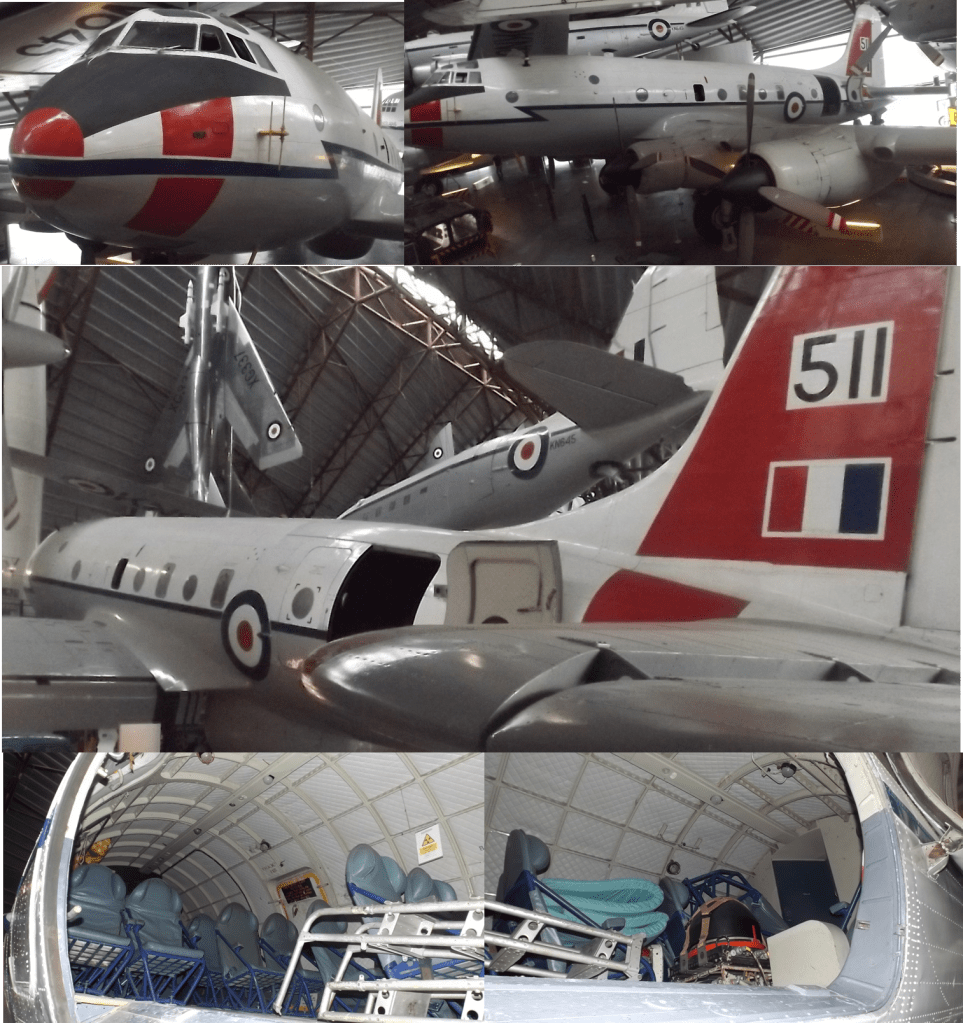
It’s a Handley-Page Hastings. What’s that got to do with football? you might well ask. Well, Hastings has a football club which competes in the Isthmian League and plays – very appropriately as far as this stretching of credibility is concerned – at The Pilot Stadium. Also, Jimmy Hastings was a policeman who played for Morecambe way back when in 1949-50 and had to retire early due to ill health. So there we have it.
When I was about eight, I wrote to the RAF and asked them if they had any spare aeroplanes they didn’t want any more. They sent me an exceptionally polite letter offering me either a fighter jet of a sort I can’t remember – or a Handley-Page Hastings. For two hundred quid. But I had to promise not to fly it.
In my juvenile mind, it would look perfect in the back garden of our Council House near Morecambe. And put even the poshest shed the neighbours might have lovingly constructed absolutely in the shade. (Probably literally, come to think of it.) Besides, it beat any Airfix model I might have been trying to make at that time all ends up. But – for reasons I can’t possibly imagine – my Dad wasn’t quite so keen on the idea…
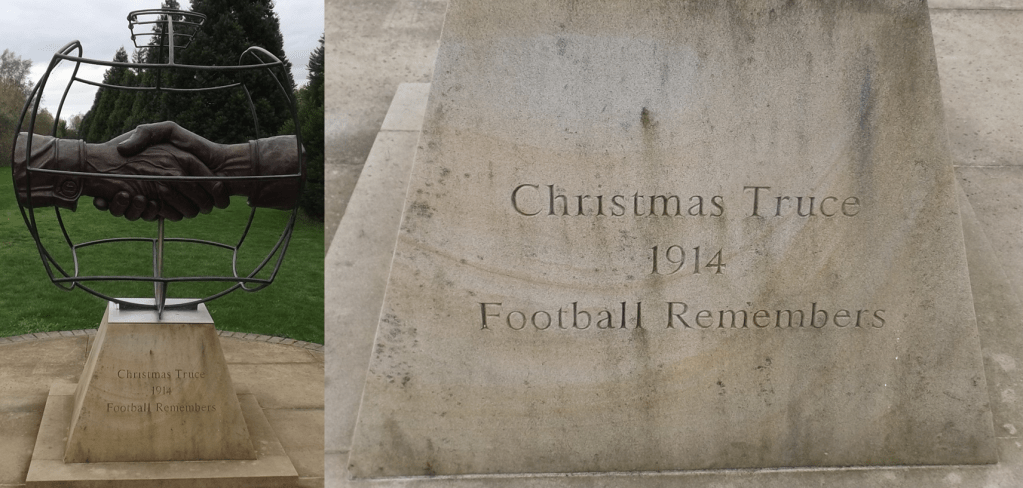
Anyway, it is far easier to make a less tenuous connection between the National Memorial Arboretum and football. Here is a photograph of a sculpture which commemorates the famous Xmas Truce, where combatants from all sides took the opportunity to meet each other and even play soccer at Christmas 1914.The Top Brass soon put an end to such unpatriotic behaviour (Hooray!) and ensured the mass slaughter and widespread maiming of young men from all over Europe and elsewhere continued uninterrupted in no time at all (Hiss!):
There was also this:
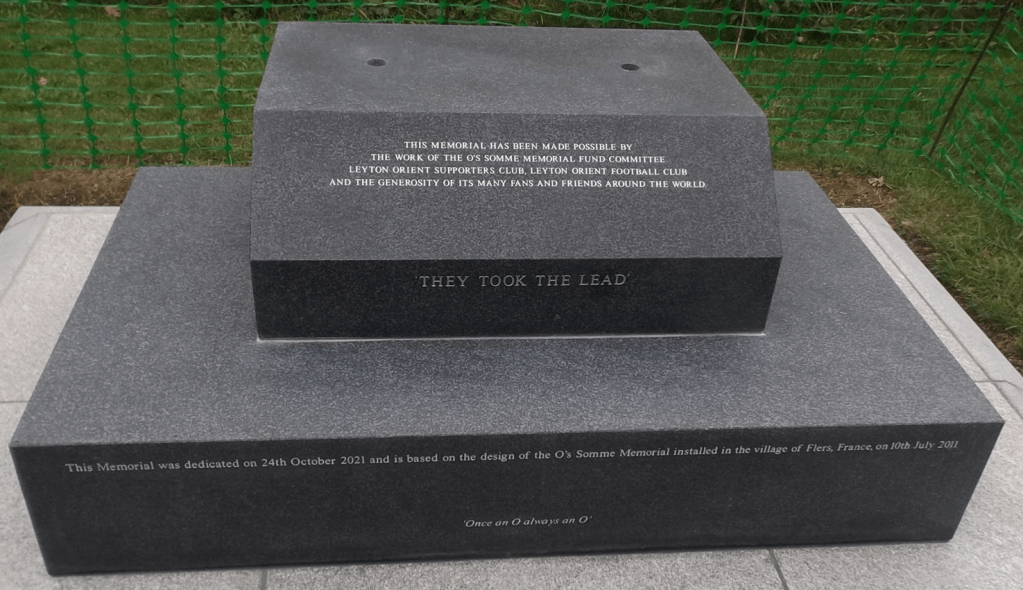
This is the O’s Memorial. Leyton Orient fans – and others – have recently paid for this to commemorate members of the original club (Clapton Orient) and its contribution to the war effort. The Arboretum’s website explains this thus:
The O’s Somme Memorial commemorates and honours the service and sacrifice of the forty one players, staff and supporters of Clapton Orient Football Club who enlisted into the 17th Battalion Middlesex Regiment – ‘The Footballers’ Battalion’ in the great war.
Clapton Orient were the first English football club to join up en masse. Three players, William Jones, George Scott and Richard McFadden were to make the ultimate sacrifice, with a further ten wounded.
I personally think the inscription at the bottom of the memorial is particularly poignant:
`Once an O, always an O’.
So there we go; lots of stuff to look at on the way and we hadn’t even reached our final destination yet. This was north-east Staffordshire and the very heart of the UK’s Brewing Industry: Burton-upon-Trent.
So what did we know about Burton before we arrived there – apart from its famous thespian sons and daughters such as Sir Richard and Amanda?
It’s where the high street tailors those of us old enough to remember such things came from, isn’t it? And it’s also rightly famous for being Britain’s capital of biscuit-making – unless I’m mistaken.
(The Editor – who clearly has a far lower view of the intelligence of the average reader than I do – has insisted that I am actually very much mistaken. In these False News times, she insists that I must correct these claims immediately. Burton Tailoring was based in London, having been founded in Chesterfield originally and Burton Biscuits still operate from Blackpool and other sites elsewhere in Britain. The company was founded in Staffordshire, though. Leek apparently. But in the pursuit of absolute clarity, she insists I make it plain that there are no Leeks actually in the biscuits. Except the Wagon Wheels for sale in Wales. No – that’s not true either apparently and you mustn’t go spreading it about on social media. Promise? Because if you do what she asks, my Editor has even said she will share the name of the river which Burton-upon-Trent stands on later…)
So what other clues do we have about Burton? The Trent singer once known as Terence? Close but no coconut – he came from Derby didn’t he?
I know: its football team is called `The Brewers’, isn’t it? What can we deduce from this? Any ideas?
No – they don’t sell wallpaper and paint as a sideline. Here’s a clue:
I think I can say without fear of contraception that it must be safe to assume it is the home of the black savoury spread in the iconically-shaped jar which people apparently are either very fond of – or detest. Did you know that Marmit is the French word for a pot of this shape? You do now. The real jars are actually made in Germany but the spread which goes in them is still manufactured in Burton-upon-Trent even these days. This is the `Monumite’ sculpture which can now be seen in a park near to the river in Burton:
Chemist and local lad Dr Justus von Liebig (local if you happen to come from Darmstadt in Germany, that is) discovered the potential of creating a nutritious spread from the by-products of the brewing process during the late Nineteenth Century. But it took local Burtonians to actually create Marmite during 1902, using the cast-offs from Bass’ many breweries in the town. And in case you’ve been wondering – and let’s face it: who hasn’t? – is Marmite Vegan? Yes. Unless you eat it out of the 70g jar. Why? Please contact them – not me – to find out the answer. Failing that, Forest Green Rovers (where these abominations are presumably not only banned by the only Vegan football club on the planet but probably ceremoniously Burnt At The Steak – Stake, rather – before home matches) can probably tell you…
So what else is whatever reputation Burton-upon-Trent currently enjoys based upon?
Before we arrived there, we both realised that it is well-known (I apologise for this dreadful attempt at a pun) for water for one reason or another. That’s why it’s situated on a river – the name of which still totally eludes me, I’m afraid. But far below the surface, there are a series of naturally-formed aquifers – er, basically flooded caves – which has given the town both its raison d’être (as they say in Staffordshire) and established its international reputation for brewing.
Why is this? Burton water (not Burton Waters, which is a very posh Marina in Lincoln) is rich in the mineral gypsum. This is the key to the brewing process for which the town has been famous for centuries. The huge beer conglomerate Carlsberg now own the site where Marston’s Albion Brewery can be found. This extant Brewery still draws its water from an artesian well far beneath the buildings on the site. Brewers elsewhere in Britain are known to create their own version of `Burton Water’ by adding this rather smelly rotten-eggs sulphurous mineral to their own water supply in a process known as – wait for it – `Burtonisation’. There was once a huge Brewery in Bolton called Magee, Marshall & Co Ltd. Did they use `Boltonised’ water to brew their beers? No they jolly well didn’t. Believe it or not, they actually transported millions of gallons of the stuff across the Pennines (by horse-drawn barge via the Trent and Derby and then other canals – at least originally, I think) from John Bell’s Brewery on Lichfield Street in Burton.
When real Burton Water is used to brew real Burton beer, it produces a fairly unmistakable and not particularly pleasant odour. This is known as the `Burton Snatch’. I kid you not. According to my Bible of British Brewing, this niff once pervaded the town even more than is the case at the moment. The Brewery History Society list no fewer than forty extant and extinct breweries in Burton-upon-Trent (that’s more than some counties have had. Rutland, for instance…) As well as the two I have already mentioned, these include such massive names from the past as Allsopp; Charrington; Everards; Ind Coope and Worthington at places with quaint names such as the Anchor, Black Eagle; Blue Posts, Burton Bridge and Shobnall Breweries.
It’s a sad fact of life that First Impressions have a lasting effect on one and all of us. The last times I drove through Burton-upon-Trent, I approached the town from the direction of Ashby-de-la-Zouch on the A511. This way, you drive past leafy lanes and some very nice houses until you finally reach the river, go over a long bridge and suddenly enter the environs of what seems to be a pretty unique town with some very impressive Georgian and Victorian brick-built architecture.
This time, though, we went into the town through a wilderness of modern industrial estates and retail parks off the A38: you could have been virtually anywhere on the planet in this grim, soul-less wasteland of bumper-to-bumper vehicles, traffic lights and endless roundabouts. The A38 itself is a nightmare of heavy traffic with far too many trucks and far too little space. We counted our lucky stars to think that back at home in North Lancashire, we have the very good fortune to live next to a three-lane motorway with a hard shoulder which probably handles a smaller traffic flow most of the time.
Annie and I stayed at the southbound Travelodge and the approach to this was in itself like doing the chicken run every time we went there: no prior visual warning of the very short slip-road with the sharp left turn at the end as a fifty-ton truck travelling at 60mph right up your fundament potentially added to the general excitement. Not. The last time we had this unforgettable experience was after we had come away from the football ground following Morecambe’s pretty feeble display against the Brewers on Friday night. We passed the modern, no doubt very functional Unilever factory where Marmite is currently manufactured. You could actually taste – never mind smell – this particular culinary delicacy. Wonderful if – like me – you love the stuff. (Try it with peanut butter on toast: Yum!) But probably not so good if you don’t.
Anyway – going back to traffic features – probably a measure of Burton itself is that one of the top five attractions of the town is apparently the Pirelli Roundabout. This can be found near the Pirelli Stadium, a.k.a. Burton Albion’s football ground. What’s so special about this specific `tourist attraction’ in the middle of the busy road to Derby, the A5121?
It has a tree in the middle. (A Rubber Tree, hopefully, with a name like the one it possesses…)
Whatever, sitting proudly right at the top of the town’s various attractions – naturally enough – is the internationally famous National Brewing Centre. Visiting this place is not so much advisable – as obligatory.
So we went. According to all the online guides, we were about to see Shire Horses; Brewers’ Drays and Beer Machines before sampling some of the liquid wares of the old Bass Brewery. Personally, I was expecting two perfectly groomed horses with braided manes and plaited tails to be literally chomping at the bit as they waited patiently to take parents and children alike on tours of the huge Brewery yard on a Dray like this one:
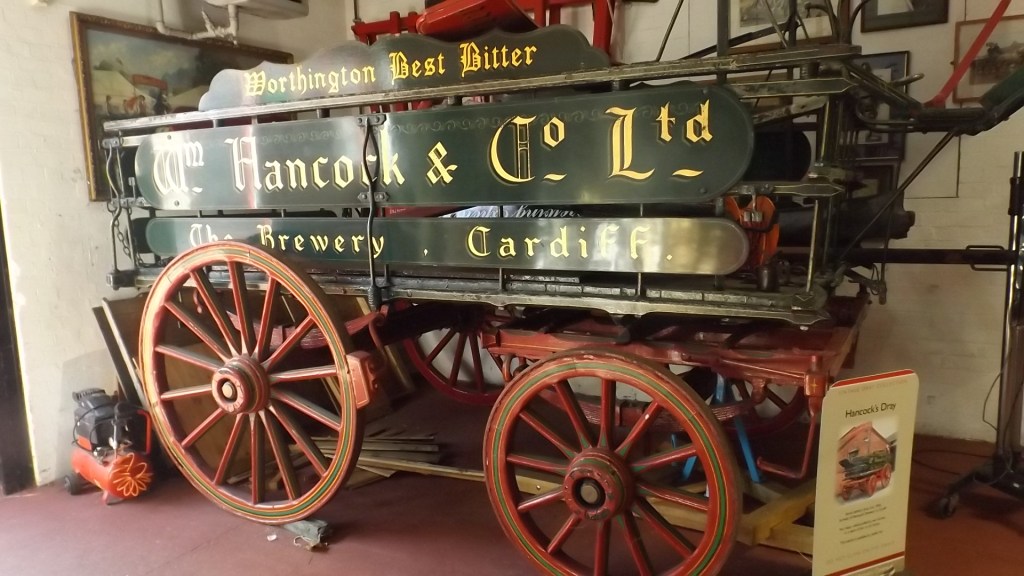
I expected the various – and quite curious – vehicles they possess which a number of British brewers once used to advertise their beers to be prominently and lovingly displayed. This ancient Worthington White Shield Bottle Car, for instance:
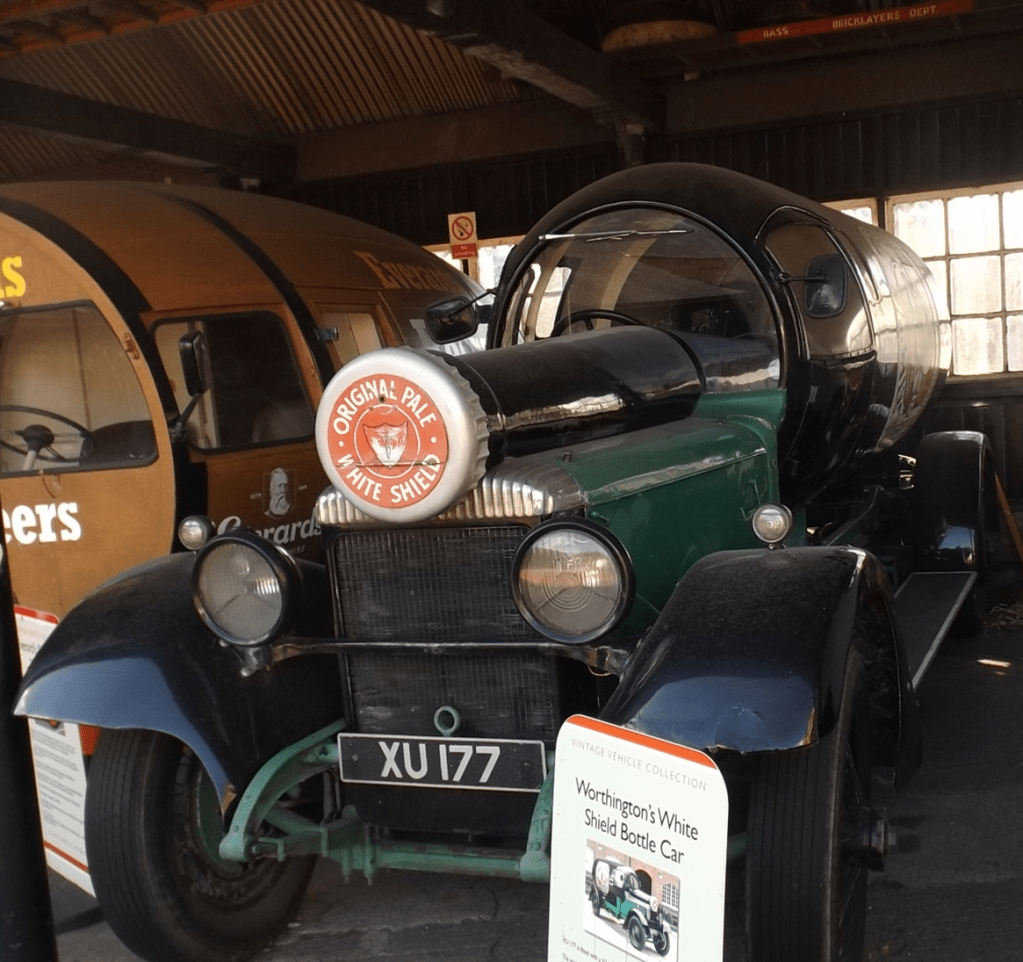
But they weren’t: they were just stuffed into anonymous sheds which you wandered around.
Two huge, handsome beasts of Stallions were standing in straw and their own dung in the Stable Yard nearby. They were both in separate stalls which looked more like prison cells, complete with iron bars. It reminded me of Zoos I visited as a child where the `exhibits’ – note the word – were treated like display pieces, not like living, sentient creatures. To me, the horses – gentle, intelligent giants who like to work and are stimulated by visitors – seemed bored and sad. And this was an impression which I felt pervaded the whole place. The Museum was like something from the 1970s where stuff was jumbled together in a seemingly haphazard way and accompanied by fading and wordy old signs which even beer bores like me found too uninspiring and needlessly technical to actually read all the way through. What was described as `the Worthington Brewery’ building had a microbrewery within it. Annie and I thought of the Lancaster Brewery as we walked past it. There, visitors don white coats and are shown the brewing process which is explained in simple terms before being served with a brew of their choice and pre-ordered food at the end of it. For a fee. Here, there was nothing like that – just a man sluicing-out the stainless steel vessels with a hosepipe. It was another huge missed opportunity in our humble opinions. The Worthington microbrewery could have been a fascinating and unforgettable experience – with a bit of thought and a modicum of reorganisation. Just think of the weight of history to do with Worthington alone. If its microbrewery was made the centre of the so-called Brewery Tap, it could have been absolutely magical. Imagine it – you could actually drink the latest incarnations of the literally world-famous brews they have produced in the past in a place which could be filled with reminders of that glorious history – mirrors; barrels; crates; bottles; adverts: photos of tied houses – the potential is endless…
We went to the actual Brewery Tap itself next for lunch. The staff were friendly and the food was good but the place itself again lacked any atmosphere or even any discernible sense of pride in the centuries-old tradition of brewing which is synonymous with Burton-upon-Trent. Look at this, for instance:
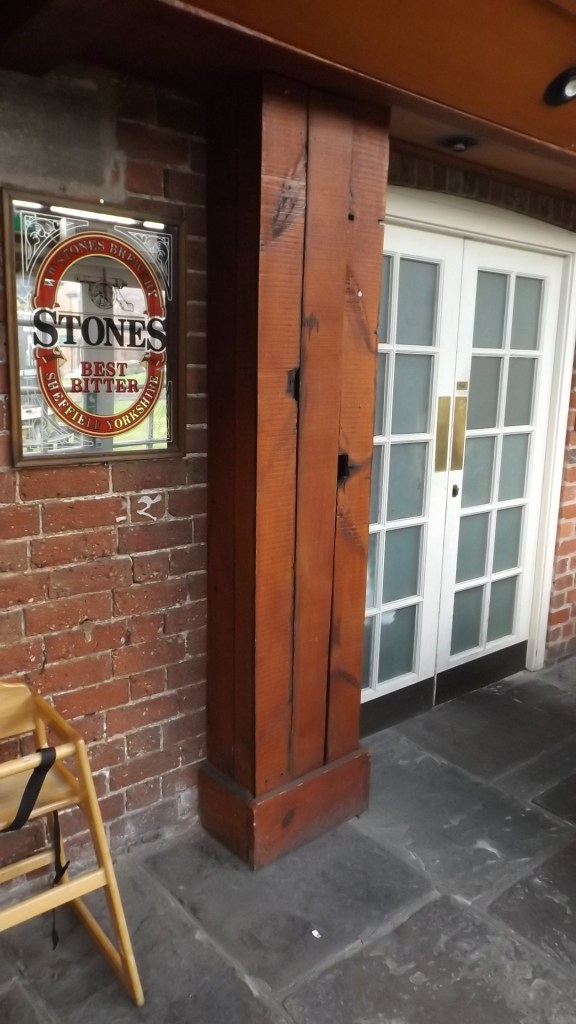
Here we see five planks cobbled together really badly to cover a down-spout from the roof.
For me, this was indicative of the whole place. Somewhere among the Museum’s presumably vast resources, I bet there are examples of (broken) Pins (20 litre/4.5 gallon casks). Imagine cutting these wooden mini-beer barrels in half vertically and fixing them one on top of another right up the wall to hide the down-pipe. Every one of them from a different brewer. This is a simple idea which would be a million times more interesting and aesthetically pleasing that what you have just looked at. The boring old chairs in the Brewery Tap could all be made out of beer barrels as well – what better place to do it?
I bought a book in their shop before we left. In it were pictures – most of them postcards – of some of the many fires which have wrecked various Maltings and Breweries in the town over the years. The book explains that all Brewing Companies in Burton had their own Fire Brigades until quite recently. Again – just think: an exhibition of photos of the fires which have occurred at Bass’ Number One Malting (an absolutely enormous building) in 1905; Peach’s Malthouse (another huge place) in 1908 or the massive inferno which consumed an Ind Coope Malthouse and then quickly spread to other parts of the Brewery during the 1970s as shown here:
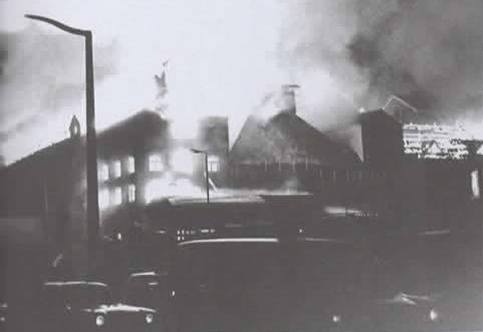
Malt is sugar-rich and thus particularly flammable. There have been plenty of other blazes in Brewery properties in Burton as well as the ones I have just mentioned. In 1977, for instance, another gigantic Bass Malting caught fire and defied the efforts of all the Fire Brigades of the combined Burton Breweries to extinguish it. So the Army had to attend to help deal with it using ancient Green Goddess tenders. Why? Because the Fire Service was on national strike at the time. What a story – you couldn’t make it up.
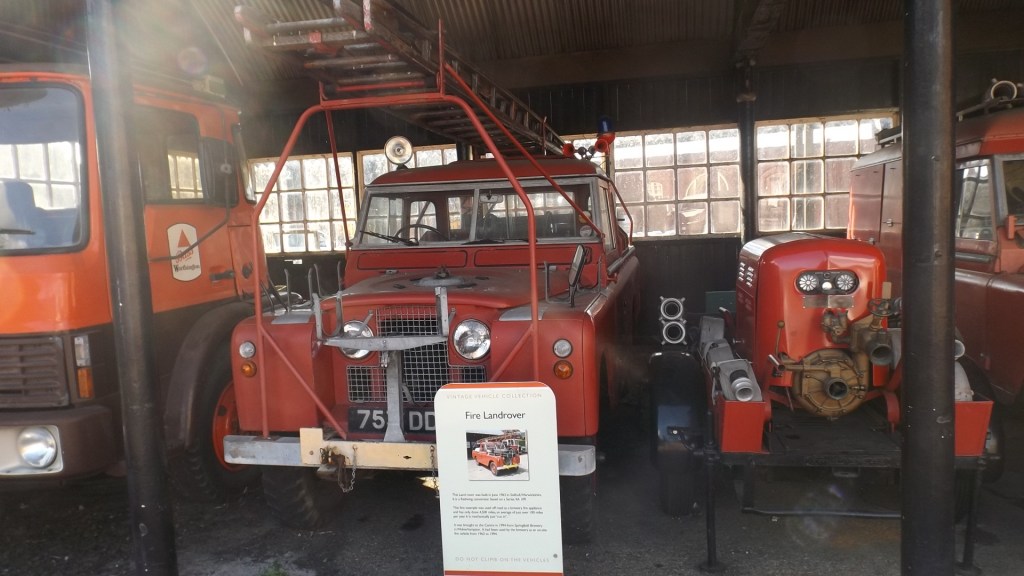
Photographs and tales like these could contribute towards a visually stunning presentation at the Museum about conflagrations in its own right. But there was not a single mention of fires in any of the places I looked. All that tipped even a slight wink at this hidden history was this display of the Bass Fire Brigade, all caked in thick dust and muck whilst looking as if it hadn’t been moved, let alone used, for years: you could grow plants on the Land Rover’s bonnet…
This is supposed to be the nation’s Brewery Museum. Two things off the top of my head which I could not see any reference to whatsoever yet have played pivotal roles in the history of British brewing are The State Management Scheme (SMS) in Carlisle and CAMRA – the Campaign for Real Ale.
Tullie House in Carlisle used to have a mock-up of a SMS bar in their museum. The Scheme was the only nationalised industry ever to have made a profit – which is why Prime Minister Ted Heath sold it off cheap to his many Tory-supporting pals in the brewing industry during 1973. Its contribution to beer making and the regulation of the industry is unparalleled in the UK: that’s where the Licensing Hours and loads of other concepts such as New Model pubs came from during and after the First World War. I’d be beating the doors down at Tullie House to get my hands on the discarded pub display if I was the Director of the Museum in Burton. By rights, it should be prominently featured there and, in doing so, make a fascinating – and thought-provoking – display about experiments in governmental social control which most people don’t know anything about.
CAMRA is possibly the most successful Pressure Group ever to have existed in the UK. Its members revolted against the virtual monopoly in the beer trade which was developing in the 1960s and 70s as `The Big Six’ British brewing conglomerates systematically bought-out and shut down hundreds of local breweries, consigning thousands of skilled brewery workers to the dole and utterly unique beer recipes to the Dustbin of History at the same time. Without CAMRA, all pub beer today would be tasteless, pasteurised, homogenous brown liquid with carbon dioxide pumped into it. There would be no Craft Beers or distinct Real Ale Breweries. Surely it’s worth at least a mention?
Inside the Museum, there was a mock-up of Burton-upon-Trent as it looked one hundred years ago. And that was basically a huge expanse of Breweries, Maltings and railway lines. Burton was as notorious at one time for its endless level crossings which serviced the private railways which once criss-crossed the town as it is nowadays for its ubiquitous roundabouts. Then, of course, most of the heavy traffic consisted of Drays and Horses – cars were virtually unheard of things.
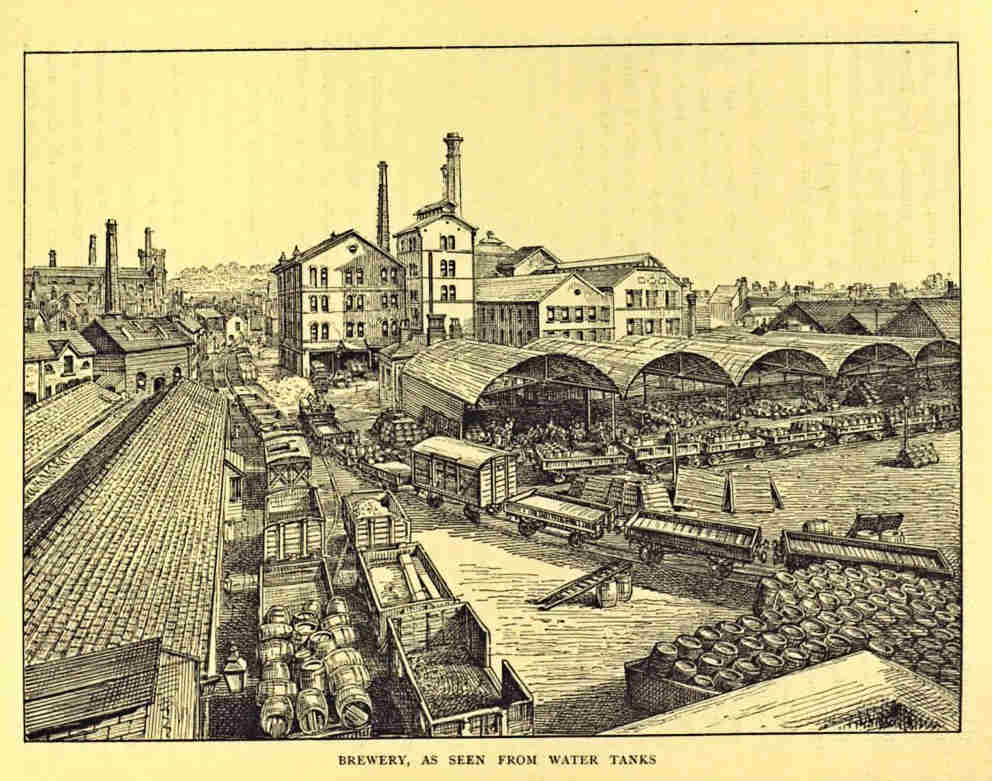
The panorama shown in the Museum is no more. In truth, the National Brewing Centre was no more once Bass’ Brewery than the place where the Microbrewery just referred to is truly Worthington’s Brewery either. The latter was huge, ornate in places and covered a vast acreage: the very small bit of it still in use was simply a humble outbuilding back in the day. Here is a picture of the Brewery in its pomp with the vast Cooperage at the front, courtesy of the Brewery History Society:
Bass had several enormous Breweries right across Burton – and even more Maltings all over the town as well. The Museum was actually part of its Engineering Department, itself a massive concern all on its own. Most Maltings were even bigger. To give you an idea of the size of these places, The Maltings on Wetmore Road – technically once Bass Malthouses Numbers Sixteen to Twenty – have recently been converted to provide a quite astonishing ninety flats (with either one or two bedrooms each) on the top floor of its four storeys alone. Remember – there were at least another fifteen buildings of this size which Bass alone operated in the town at one time. The Maltings – a relatively small part of which was severely damaged by a fire in August 2021 – are unusual in that they have actually survived Burton’s industrial past. Most of the rest if it hasn’t. The Brewery History Society has created a historical Walk through Burton which can be found here:
http://Breweryhistory.com/wiki/index.php?title=Burton_on_Trent
We didn’t have time to do it. But if you did, you would basically be walking through the ghosts of Burton’s past. If you worked your way through the directions, you would find no trace of Breweries such as Truman’s; Allsopp’s; Walker’s; Eadie’s and others too numerous to mention. Same with most of the Maltings referred to: they were nearly all demolished ages ago too.
With them, I fear, has gone the beating heart of Burton-upon-Trent. You feel that the place is as soul-less as its football ground had been until the Brewers went 3-1 up against Mighty Morecambe last Friday night. There’s a palpable sense of loss of purpose; of the same sort of sadness which I felt permeated the Brewing Museum. The day we left was the second day of the Oktoberfest planned for this site. Where were the adverts? Where were the crowds? How has this celebration of beer been promoted, even locally? Nothing I saw anywhere in the town was pushing this event – not even at the football ground. Even here, not a single hoarding around the pitch or on the stands would suggest that you were in a place once internationally famous for its beer-making.
So what did we make of Burton-upon-Trent at the end of our visit? Did we love it – or – just like the Marmite it still produces – hate it? The answer is: actually neither.
I still have a nagging feeling that the town itself represents an opportunity somehow wasted; that its museum – and the place that spawned it in the first place – has lost its way somewhere along the road.
What a shame.
Some of you may deem me guilty of exceeding my brief to `not start burbling on about other things’ with what I have just written about the National Brewery Centre. I plead Not Guilty. The link between the Museum and football is betrayed by my alternative title for this article:
“The Brewers of Burton.”
I rest my case…
 shrimplythebestfootball